Question:easy
The RNA primer synthesized during bacterial DNA replication is removed by .
The RNA primer synthesized during bacterial DNA replication is removed by .
Show Hint
Recall that removing an RNA primer needs a 5' to 3' exonuclease activity paired with polymerase activity; only one bacterial DNA polymerase has both.
Updated On: Aug 7, 2026
- DNA gyrase
- DNA Polymerase I
- Primase
- DNA Polymerase III
Show Solution
The Correct Option is B
Solution and Explanation
This question checks if you know what each bacterial DNA polymerase actually does during replication, not just their names.
- DNA gyrase: This is a type II topoisomerase. It introduces negative supercoils ahead of the replication fork to relieve the torsional strain from unwinding the double helix. It has no role in primer removal.
- DNA Polymerase I: This enzyme has three activities, a 5' to 3' polymerase activity, a 3' to 5' proofreading exonuclease, and a 5' to 3' exonuclease. That last activity lets it degrade the RNA primer one nucleotide at a time from its 5' end while at the same time extending the DNA strand from the upstream 3' end, so the primer is replaced with DNA as it is removed.
- Primase: This is an RNA polymerase (part of the primosome) that makes the short RNA primer in the first place. It works upstream of the problem the question asks about, not on removing it.
- DNA Polymerase III: This is the main replicating enzyme, fast and highly processive because of the sliding clamp, but it only has 5' to 3' polymerase and 3' to 5' proofreading activities. It cannot degrade RNA, so it hands off each Okazaki fragment to Polymerase I once it bumps into the next primer.
So among the four choices, only DNA Polymerase I combines the ability to degrade RNA from the 5' end with the ability to fill the gap it leaves with DNA, which is exactly what removing an RNA primer means.
Let's summarize:
- Primer removal needs a 5' to 3' exonuclease activity, which only DNA Polymerase I has among the four options.
- DNA Polymerase III replicates DNA in bulk but cannot cut out RNA; DNA ligase later seals the nick Polymerase I leaves behind.
The RNA primer is removed by DNA Polymerase I.
Was this answer helpful?
0
Top Questions on Nucleic acid: replication, transcription, splicing, translation
- Calculate the λmax of the following molecule:
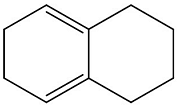
- GPAT - 2024
- Biochemistry
- Nucleic acid: replication, transcription, splicing, translation
- Calculate the \( \lambda_{\text{max}} \) of the following molecule:
- GPAT - 2024
- Biochemistry
- Nucleic acid: replication, transcription, splicing, translation
- Want to practice more? Try solving extra ecology questions todayView All Questions