Question:medium
Given below are two statements:
Statement: Modal verbs have only one form. They have no -ing or -ed forms and do not add -s to the 3 person singular form.
Statement II: Modal verbs are followed by past participle form of the other verbs.
In the light of the above statements, choose the correct answer from the options given below:
Given below are two statements:
Statement: Modal verbs have only one form. They have no -ing or -ed forms and do not add -s to the 3 person singular form.
Statement II: Modal verbs are followed by past participle form of the other verbs.
In the light of the above statements, choose the correct answer from the options given below:
Statement: Modal verbs have only one form. They have no -ing or -ed forms and do not add -s to the 3 person singular form.
Statement II: Modal verbs are followed by past participle form of the other verbs.
In the light of the above statements, choose the correct answer from the options given below:
Updated On: Jan 13, 2026
- Both Statement I and Statement II are true
- Both Statement I and Statement II are false
- Statement I is true but Statement II is false
- Statement I is false but Statement II is true
Show Solution
The Correct Option is C
Solution and Explanation
- Assertion I: Correct. Modal verbs (e.g., can, may, should) maintain a consistent form across tenses, lacking -ing or -ed variations, and do not add -s in the third-person singular.
- Assertion II: Incorrect. Modal verbs are followed by the verb's base form, not its past participle. For instance, "She can go," rather than "She can went."
Was this answer helpful?
0
Top Questions on Grammar
Poetic Devices: Identify the poetic device used in the following line: "The wind whispered through the trees."
- VITEEE - 2025
- English
- Grammar
- Synonyms/Antonyms: What is the synonym of the word "Eloquent"?
- VITEEE - 2025
- English
- Grammar
- Idioms/Proverbs: Which of the following idioms means "to do something in a very energetic or enthusiastic manner"?
- VITEEE - 2025
- English
- Grammar
- Read the following sentences carefully.
A. I shall be there at about 9: 00 a.m.
B. Keep off of the grass.
C. My old car was much faster than the new one.
D. I was angry at my friend.
E. Rohit is as capable as Virat.
Which of the following combinations has all the INCORRECT sentences? - Want to practice more? Try solving extra ecology questions todayView All Questions
Questions Asked in CMAT exam
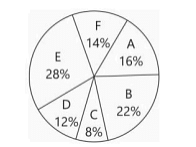
Study the pie chart and table and answer the questions
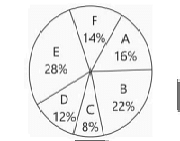
What is the difference between average number of linen kurtis sold by stores D and E together and average number of cotton kurtis sold by the same stores together?
| Store | Respective ratio of number of linen kurtis to cotton kurtis sold |
| A | 7:5 |
| B | 5:6 |
| C | 3:2 |
| D | 5:3 |
| E | 4:3 |
| F | 7:3 |
What is the difference between average number of linen kurtis sold by stores D and E together and average number of cotton kurtis sold by the same stores together?
- CMAT - 2024
- Pie Charts