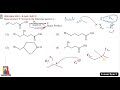
The reaction presented is an elimination reaction, employing alcoholic KOH as the base. These conditions promote alkene formation through an E2 mechanism. The elimination proceeds via the abstraction of a beta-hydrogen, resulting in the formation of the most stable (i.e., more substituted) alkene as the principal product. The product obtained in this instance is a highly substituted alkene, thus identifying option (2) as the correct selection.